
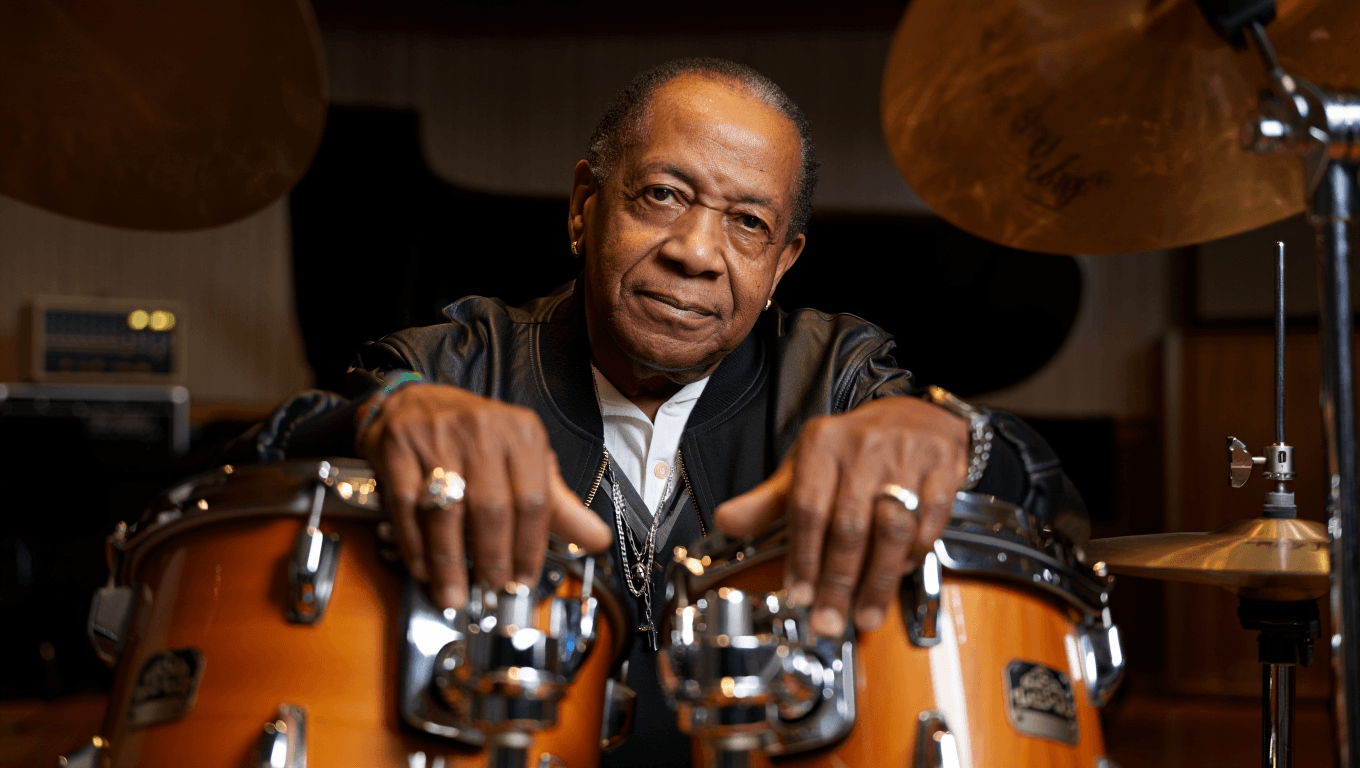
Reggae drummer Sly Dunbar, a two-time Grammy winner and one half of the legendary Jamaican rhythm pair Sly & Robbie, has died at the age of 73. Dunbar, whose career spanned decades and included collaborations with stars from Bob Marley to Bob Dylan, passed away at his home in Kingston, Jamaica.
His wife, Thelma Dunbar, informed the Jamaica Gleaner that she discovered he was unresponsive early Monday morning. “I went to wake him around 7 a.m. and he wouldn’t respond. I called the doctor and then learned the news,” she told the paper, adding that Sly had been battling illness for some time and had received medical care both in Jamaica and abroad.
Thelma described a seemingly upbeat day before his death, saying friends had come by to visit and they had a pleasant time together. She noted he had eaten well the previous day — not always a given, she said, since he sometimes lost his appetite — and that while she was aware he was ill, she had not realized how grave his condition had become.
Born Lowell Fillmore “Sly” Dunbar in Kingston on May 10, 1952, he began playing professionally as a teenager. At 15 he was a member of a group called the Yardbrooms. His first recorded contribution appeared on the Dave and Ansell Collins album Double Barrel, and he later performed with Ansell in the band Skin, Flesh and Bones.
Dunbar met bassist Robbie Shakespeare in 1972; Shakespeare was then a member of the Hippy Boys. The two forged a musical partnership that became known worldwide as Sly & Robbie. As a rhythm section they powered countless reggae tracks, providing drum and bass foundations for acts such as Black Uhuru, Jimmy Cliff and Peter Tosh.
Their work extended well beyond Jamaica. In the 1980s Sly & Robbie played on several of Grace Jones’ influential records, including Warm Leatherette, Nightclubbing and Living My Life, and contributed to multiple albums by Bob Dylan, among them Infidels, Empire Burlesque and Down in the Groove.
Dunbar was also a member of the Revolutionaries, the house band for the Channel One studio in Jamaica, and his drumming features on notable recordings like Bob Marley’s “Punky Reggae Party,” Junior Murvin’s “Police and Thieves” and Maxi Priest’s “Easy to Love,” to name a few.
Recognition for his contributions came in the form of numerous Grammy nominations — 13 in total — and two wins. He earned a Grammy when Black Uhuru’s album Anthem was honored as Best Reggae Recording in 1985, and again in 1999 when Sly & Robbie’s album Friends won Best Reggae Album.
Beyond performing, Dunbar and Shakespeare launched Taxi Records in 1980, a label that would become an important incubator for Jamaican talent. Over the years Taxi released music by artists such as Shaggy, Shabba Ranks, Skip Marley, Beenie Man and Red Dragon.
Fellow musicians and producers long acknowledged Dunbar’s ubiquity and influence. In 1979 Brian Eno observed to DownBeat that the odds were high a reggae record would feature Sly on drums, and he noted that Dunbar’s imaginative percussion parts were frequently reused because they were so distinctive.
Sly Dunbar’s passing marks the end of a remarkable career that helped define modern reggae and influenced generations of musicians worldwide. He is survived by his wife, Thelma, and a legacy of recordings and collaborations that will continue to be celebrated.

Hi, I’m Emily, a passionate and dedicated member of the Sherburne County Citizen team. With a keen eye for detail and a love for writing, I ensure that the latest celebrity news, major economic trends, and helpful tips for your home are presented in the most engaging and informative way possible. Fun fact: During a particularly exciting news story, I once managed to finish an article in record time, fueled solely by copious amounts of coffee and pure adrenaline!
