
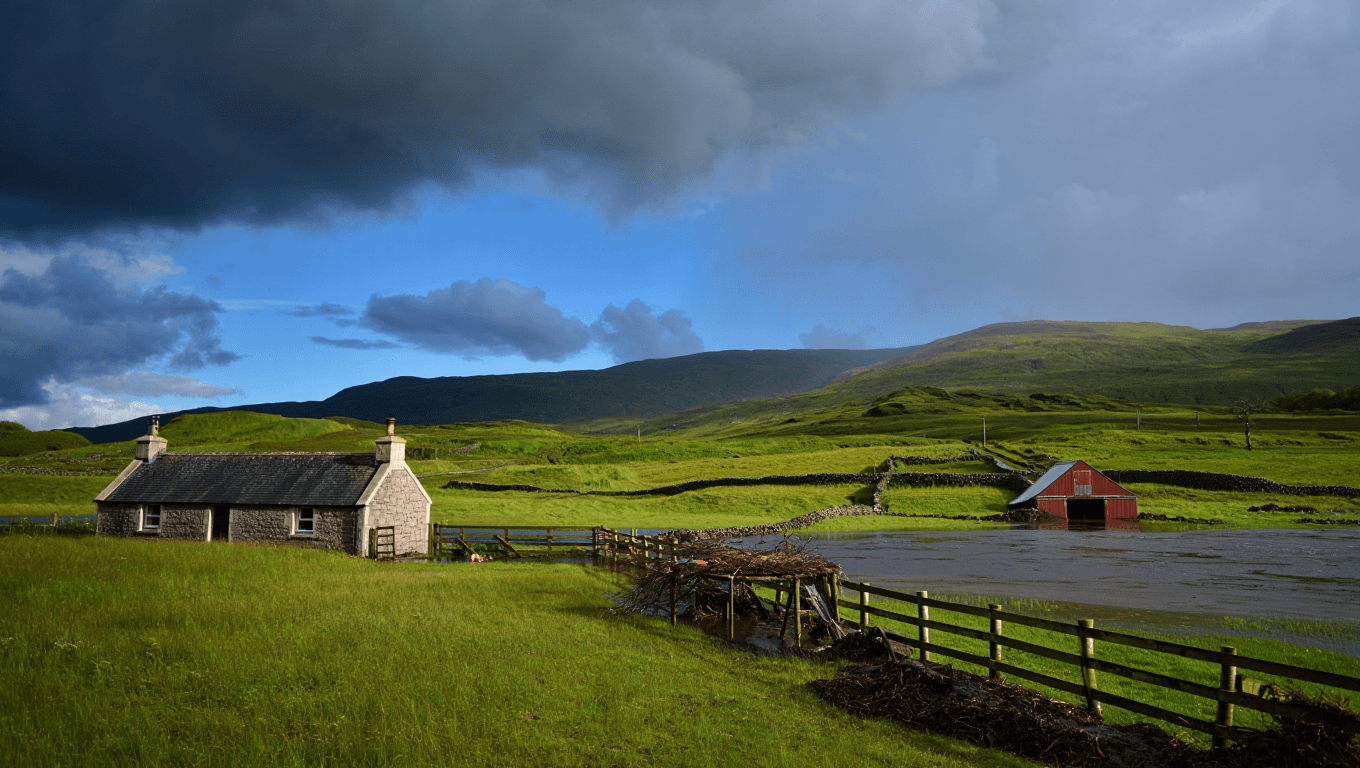
Small, local actions are already changing how water moves across Scotland—and they matter now. As intense rainfall becomes more frequent, homeowners, farmers and councils can adopt straightforward measures that slow runoff, reduce peak flows and lower flood risk downstream.
What can be done where you live
Not every solution requires big budgets or major engineering. Many of the most effective interventions work by keeping water where it falls for longer: letting soil soak it up, planting to intercept rain, and creating simple on-site storage.
- At home: Install rain barrels or cisterns to capture roof run-off for garden use; replace impermeable paving with permeable surfaces; and check and clear gutters and drains before the wet season. These steps reduce immediate surface runoff and can cut household flood exposure.
- In gardens and streets: Create rain gardens, add porous paving, and plant more trees and hedges. Even small green spaces and street planters slow water and filter pollutants, improving local drainage capacity.
- On farmland and larger properties: Adopt measures such as rewetting peat soils, restoring floodplain wetlands, installing leaky woody dams or engineered log jams, and adjusting grazing to reduce soil compaction. These interventions retain water upstream and blunt flood peaks downstream.
- At community scale: Work with neighbours on shared storage ponds, natural floodplain reconnection projects, or riverbank planting. Community-led schemes distribute cost and increase resilience across whole catchments.
Why these measures work
Actions that increase infiltration, slow flow paths and temporarily store water reduce the speed and volume of runoff heading downstream. That lowers the height of flood peaks and can make the difference between minor disruption and major damage for towns and villages below.
There are co-benefits too: many nature-based solutions also improve biodiversity, capture carbon, reduce soil erosion and enhance water quality—so investments in flood resilience often bring positive environmental returns.
Getting started: a practical checklist
- Survey your property for hard surfaces and blocked drainage.
- Prioritise quick wins: gutters, downpipes, and a rain butt are low-cost and immediate.
- Talk with neighbours about shared problems — coordinated action across a street or catchment is more effective than isolated fixes.
- Contact your local authority or environmental agency for guidance, maps of flood risk and information about grants or pilot programmes in your area.
Who needs to act — and what they can do
Different actors have different levers. Homeowners can retrofit gardens and roofs. Farmers and land managers can change soil and grazing practices. Councils and water managers can remove barriers to natural floodplain processes and prioritise green infrastructure in planning.
Without coordinated upstream action, engineered defences alone will struggle to keep pace with more frequent extreme rainfall. Combining on-the-ground nature-based measures with targeted engineering delivers the most resilient outcomes.
What to watch for and potential trade-offs
Some interventions require careful design: rewetting peatlands may affect local access or require compensation; reconnecting floodplains can mean changing land use; temporary storage features must be sited to avoid creating new risks. Robust local planning and community consultation help balance benefits and impacts.
Finally, success depends on scale. Individual changes are valuable, but outcomes improve sharply when neighbours, landowners and authorities act together across a whole river catchment.
For immediate steps, start small, share knowledge locally, and seek advice from your council or environmental bodies—collective, upstream action is the most direct way communities can help slow the flow and reduce flood harm across Scotland.

Hi, I’m Benjamin, a member of the Sherburne County Citizen team. With a passion for writing and a deep interest in current affairs, I thoroughly enjoy bringing you the latest news and trends that affect our daily lives.
