
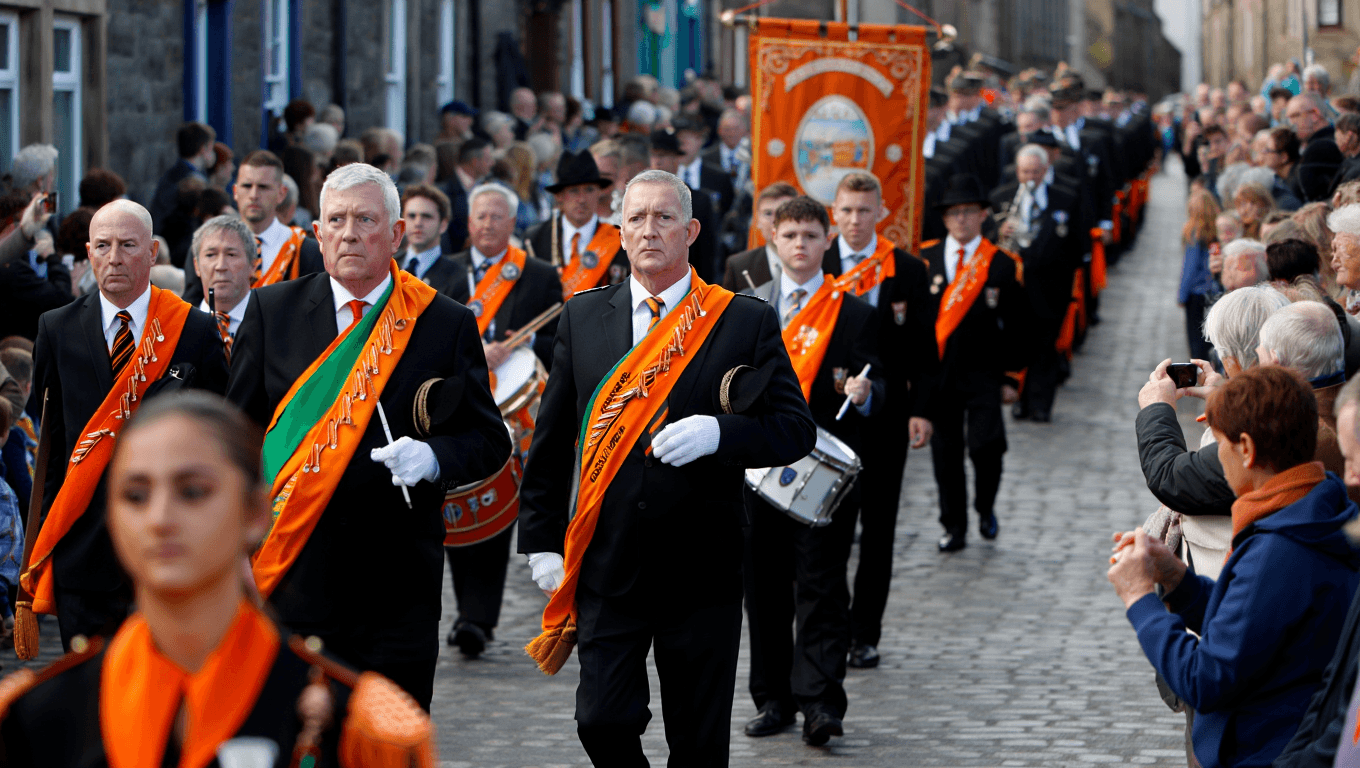
The Orange Order held a procession through Stonehaven, Aberdeenshire, on Saturday — the first such march in the north‑east of Scotland in a quarter of a century — reviving a long‑running local debate about sectarian parades and community relations. The event went ahead amid hundreds of complaints from residents and a string of legal and council challenges earlier this year.
The march was organised by the Dunnottar Martyrs Memorial Loyal Orange Lodge and, according to the BBC, about 50 people took part while dozens of onlookers lined the route. Police Scotland said the procession passed without any recorded incidents.
Councillors had granted permission for the parade earlier in 2025 subject to conditions, including a ban on playing music close to places of worship. Local campaigners and some residents remained opposed: Brian Menzies of the Stonehaven and District Community Council told reporters people in the town felt “deeply worried and exasperated” about the decision.
How the day unfolded
The march followed a year of contestation. Aberdeenshire Council moved to block a Stonehaven route in 2024, and an appeal by the Orange Lodge against that decision was dismissed by a Sheriff. The organisation had also hoped to mark the opening of a new lodge in the town hall and initially expected a larger turnout.
Parades associated with the Orange Order traditionally commemorate the Battle of the Boyne (1690) and are common in Scotland’s central belt, but they are rare in the north‑east. The last comparable event in the region took place in Aberdeen in 2001, when hundreds of protesters shadowed the march through the city centre.
- When: Saturday morning (recent)
- Where: Stonehaven, Aberdeenshire
- Organiser: Dunnottar Martyrs Memorial Loyal Orange Lodge
- Participants: ~50 (reported by BBC)
- Objections: hundreds of local complaints, more than 100 formal objections lodged with the council
- Council conditions: no music near places of worship
- Police: procession passed without incident
For residents and officials the march illustrates competing priorities: the right to assemble and mark cultural traditions on one hand, and concerns about community cohesion and the potential for tension on the other. Councillors and the courts have been involved repeatedly this year, signalling that similar proposals will continue to face scrutiny.
Observers say the immediate consequence is renewed attention on how local authorities manage controversial parades — from route approvals and noise restrictions to the role of public consultation. Longer term, the episode may prompt more structured dialogue between parade organisers, faith groups and community representatives in the north‑east.
Authorities and community leaders now face a choice: treat the event as an isolated occurrence or use it as an opportunity to build clearer, mutually agreed procedures to reduce conflict around future processions.

Hi, I’m Benjamin, a member of the Sherburne County Citizen team. With a passion for writing and a deep interest in current affairs, I thoroughly enjoy bringing you the latest news and trends that affect our daily lives.
