
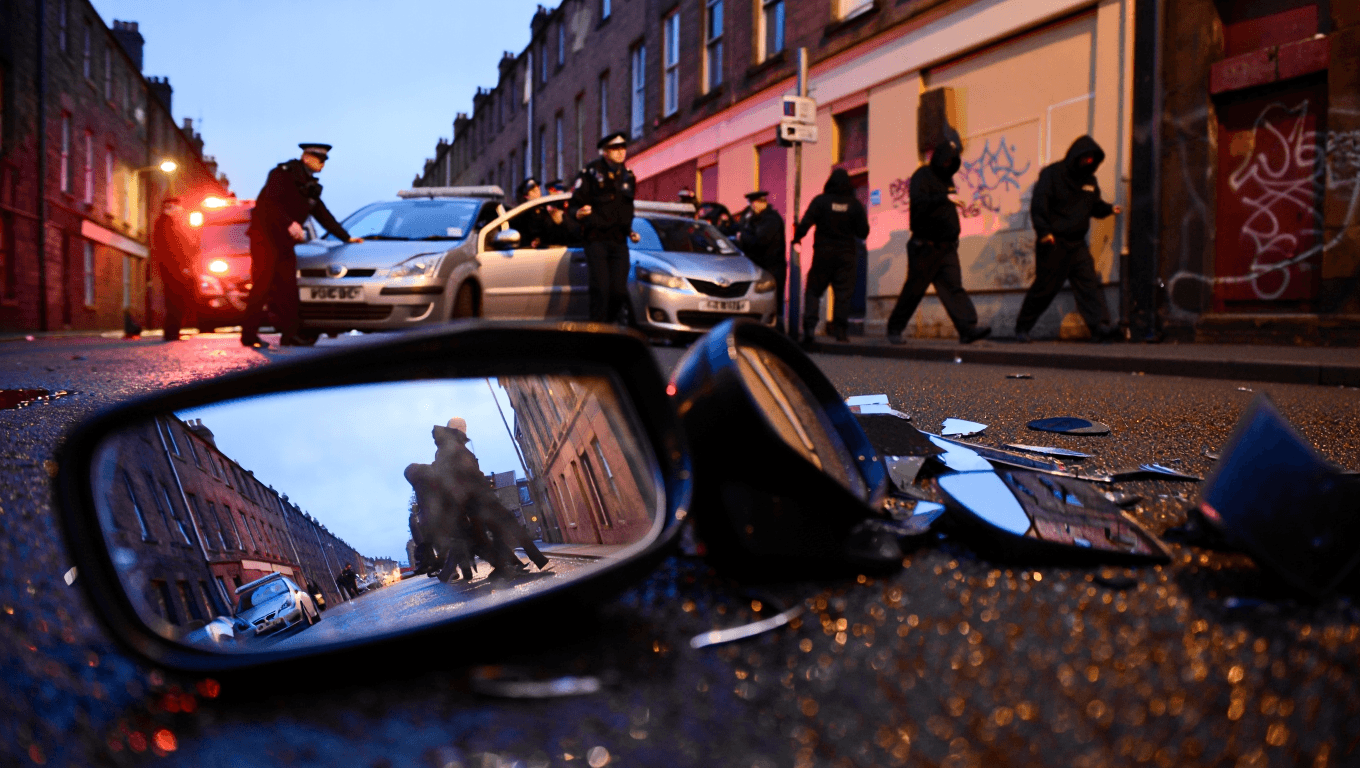
A former Police Scotland inspector has warned that dwindling numbers of officers are leaving parts of Scotland vulnerable to organised criminal networks, a claim that comes amid a recent spate of firebombings and street violence. His resignation last October and renewed public comments this week have put frontline capacity and crime prevention back at the centre of the national debate.
Claims from the frontline
Ryan McDonald, who left the force after more than three decades including roles in Grampian, Tayside and as a scenes‑of‑crime officer for Police Scotland, says routine patrols and proactive policing have been squeezed by staff shortages and administrative burdens.
McDonald argues that officers are now spending large parts of their shifts responding to 999 calls and handling low‑level tasks—everything from delivering court paperwork to investigating vandalised wing mirrors—leaving little time for intelligence gathering, targeted stops or surveillance work he says are most effective against organised groups.
He points to a long‑term decline in numbers since the creation of Police Scotland in 2013: the force’s headcount has fallen from about 17,496 to roughly 16,444, a reduction he says is driving the problem.
“There simply aren’t the people on the streets to do the proactive, disruptive work that stops crime escalating,” he told reporters. McDonald adds that a typical shift in many stations now runs with fewer than 20 officers, down from averages he recalls closer to 35, and that individual officers may carry dozens of outstanding incidents in their caseload.
Recent violence and organised groups
Police and community leaders have been alarmed by a year of high‑profile attacks — including firebombings and violent assaults — that investigators link to feuds among several crime families and younger gangs operating in Glasgow and Edinburgh.
McDonald singled out one group, said to be led by Ross “Miami” McGill and known locally as the Tamo Junto, among those driving recent violence. He contends the current policing model does not leave enough capacity to infiltrate or disrupt such networks effectively.
- On the streets: Fewer proactive patrols and fewer stop‑searches, McDonald says.
- Operational impact: Less surveillance and intelligence submission to counter organised crime.
- Day‑to‑day tasks: More officer hours consumed by administrative and low‑level duties.
- Suggested fixes: Shift more roles to civilian staff, increase frontline numbers, and broaden Taser availability.
McDonald also criticised senior leadership, arguing that managers who have not recently policed the frontline are out of touch with how their decisions affect day‑to‑day operations.
What officials say
The Scottish Government and Police Scotland responded by pointing to recent investment and policy changes.
Government ministers note a planned policing budget of more than £1.7 billion for 2026–27 and say recruitment in the last financial year was higher than at any time since 2013. They also stressed long‑run falls in recorded crime and highlighted joint agencies — such as the Scottish Crime Campus — that coordinate work against serious organised crime.
Police Scotland reiterated its commitment to a vision of “safer communities, less crime” and said it is prioritising threat, harm and risk while working with partners to reduce demand on officers and to deliver better support for staff welfare.
Both responses emphasise a combination of investment, strategy and partnership as the route to tackling organised criminality rather than simply returning to previous patrol models.
Practical implications for communities
The debate raises clear, immediate questions for residents in affected areas: will more resources mean faster disruption of violent networks, and how quickly can changes be implemented? Answers depend on recruitment, how roles are reallocated between sworn officers and civilian employees, and operational choices made by police leadership.
The stakes are tangible: when fewer officers are available for searches and covert work, opportunities to identify supply chains, weapons sources and local coordinators shrink—potentially allowing gangs to operate with greater freedom.
McDonald also advocates wider issue of Tasers to officers—he describes them as a deterrent and a tool for officer safety—saying that broader arming could change the dynamic in volatile situations.
| Issue | McDonald’s view | Official position |
|---|---|---|
| Numbers on the beat | Fewer frontline officers; reactive policing predominates | Investment and recruitment have increased; per‑capita numbers remain higher than some UK regions |
| Focus of work | Too much time on administrative/low‑level tasks | Prioritising threat, harm and problem solving; seeking partners to reduce demand |
| Organised crime | Opportunities to travel and operate more freely without proactive disruption | Cross‑agency initiatives target those profiting from serious crime |
McDonald’s account is grounded in three decades of service, including nine years with the RAF military police and a tour in Iraq, and a long record working on crime scenes and major investigations. He has also written a memoir about his time in uniform titled Blue Lights: Dark Mind.
Whether public confidence will be restored depends on measurable shifts in policing practice and visible results in reducing violent incidents. For now the exchange between a high‑profile former inspector and official sources has put operational resource allocation back under the microscope, with clear consequences for policy and neighbourhood safety.

Hi, I’m Benjamin, a member of the Sherburne County Citizen team. With a passion for writing and a deep interest in current affairs, I thoroughly enjoy bringing you the latest news and trends that affect our daily lives.
